Monday, June 30, 2014

Despite emotions, Facebook is not contagious

I am not one of those researchers who are "outraged" by Facebook's emotional manipulation study. Facebook, Google and Twitter make their living by manipulating our emotions. These companies continually manipulate  what we see when we go online, usually so we keep coming back for more. In this context, it doesn't seem so terrible that they sometimes use their power to make new interesting scientific findings.

Figure from Kramer et al. showing effects
measured in 'social contagion' study.
I am however doubtful about aspects of the result presented in the new PNAS article. The authors claim to provide "experimental evidence for massive-scale contagion via social networks" and "first experimental evidence to support the controversial claims that emotions can spread throughout a network". What is actually provided is a rather weak effect. In the experiment, the authors removed between 10% and 90% of positive posts from people's news feed and found that the percentage of positive words used dropped from around 5.25% to just over 5.1%. I show the results figure from the paper on the right so you can see the results yourself.

So what does this result mean in terms of social contagion?  Imagine I have 100 friends on Facebook and 50 of them stop writing positive things online. If I write 100 words a day on Facebook, then according to the experimental results, during one week I will write a total of one less positive word. Maybe on Wednesday I'll write 'OK' instead of 'Good'. This lost 'good' will have almost no effect on my friends. Of the 70000 words they might read in a week (assuming everyone is like me and writes 100 words a day and has 100 friends)  one of them will be less positive. There is no way that this type of effect will turn in to a "contagion". My potential 'good' will be lost in a noise of 'likes' and smiley faces. Quite quickly everyone will recover from negative thinking and the balance of happy and sad words will return to normal levels.

The authors partially acknowledge my point saying that "the effect sizes from the manipulations are small" but claim that "the massive scale of social networks such as Facebook, even small effects can have large aggregated consequences". While this statement is true, my argument above shows that the aggregation works against contagion, not in favor of it. I could make this argument more thorough, accounting for interactions between individuals and calculating R0, but the result will be the same. The Kramer et al. study show that emotions are negligibly contagious on Facebook.

Overall, the Facebook study is a useful contribution to the literature and I am glad to see it published. What concerns me is how quickly an idea like 'online emotions are contagious' can spread without anyone checking the basics. Scientific ideas are contagious and often spread unchecked (although maybe I should check how strong this effect actually is before I make such claims :-) ).

Thursday, June 26, 2014

The Collective Machine

Ants solve the Towers of Hanoi maze.
Image and experiments by Chris Reid. 
Often when  'collective behavior' researchers write grant proposals we highlight the possibility of our research inspiring future computing. The idea is that if we can better understand how ants, amoeba and fish solve problems in groups we can inspire new computer design. Everyone, from the grant writers, the reviewers, and the funding bodies take these claims with a small pinch of salt. Yes, one day we might build swarm computers, but it is a bit difficult to see how ants solving mazes really provides insights that are useful today.

A few years ago I led a research project on "Optimization in natural systems: ants, bees and slime moulds", funded by the Human Frontiers Science Programme. The team consisted of myself, social insect biologist Madeleine Beekman, slime mould expert Toshi Nakagaki, and computer scientist Martin Middendorf. Our research was very successful and we learned lots about the organisms involved. But, if I am honest, we never got close to translating our results in to real progress in computing.

Or so I thought…… A couple of weeks ago I read about Hewlet Packard's new computer, called The Machine. According to the HP press release the machine will vastly increase the speed of computing. From the news articles alone, it is difficult to work out exactly what revolution is contained within The Machine, but the word that comes up repeatedly is memristor. It is here that there is a link to collective behavior in biology.

The memristor is an electronic component which changes its resistance as an electric current passes through it. This change in resistance gives the memristor its memory. It also provides an exact analogy to slime moulds and pheromone-laying ants. Slime moulds connect food sources with tubes that increase in size with flow of nutrients and ants build trails which  become more attractive as the flow on them increases. In a recent paper we showed exactly how the analogy between electrical networks, slime moulds and ants are explained through current re-enforced random walks (the video on the right shows this algorithm solving a non-linear transport optimisation problem). Slime moulds, ants and The Machine compute in the same way.

The way these systems compute is fundamentally different from traditional computers. In a traditional computer the processor fetches from memory, performs an action, and updates memory. In memristor-based systems, memory and processing update simultaneously. This allows for massive parallel computation. One of the researchers working on our project in Uppsala, Anders Johansson, has proved that these systems can solve linear programming problems in a completely decentralized way. A small adjustment to the method can give fast approximate solutions to NP-hard problems. Anders has put some of his results written together with Toshi's group on the ArXiv and published a paper with James Zhou on the linear programming proof. But I haven't managed to get him to write up a whole load of other nice results he has on these systems. Maybe 'The Machine' will inspire him to get going.

In general, despite the skepticism I started this article with, I would encourage more researchers to think in terms of distributed electrical circuits and their links to biology. It is very likely that the human brain has aspects of this type of processing in its design. And whatever The Machine might be able to do, it still can't come close to our own brains.


Wednesday, June 25, 2014

New styles of moshing

In my recent Modeling Complex Systems course, the final project involved implementing a model from an article from the exisiting literature. Most of the models the students could choose from were complex systems 'classics'. For example, Nowak & May's spatial games; Albert, Jeong & Barabasi networks; Couzin et al. leadership of flocks were all included. But for fun I added one of my favourite papers of last year, by Silverberg et al., on mosh pits.

Silverberg and colleagues first analyzed online videos to identify how rock fans behaved when moshing. An example of a 'circle pit' is shown to the left. To explain how these pits are formed, the researchers built a model which assumed two types of concertgoers, those that want to bounce around and those that want to stand still. The active, bouncing moshers were subject to three types of forces. The first force was a tendency to follow in the same direction as those around them, the second was a tendency to mosh around at random and the third was the inevitable force caused by bumping in to others. The passive moshers were subject only to the last force. When active moshers bumped in to passive bystanders they bounced off them. This model was able to reproduce both the circle pit shown in the picture and the traditional random mosh pit.

Two groups of students in my class worked through a complete re-implementation of the model. Both groups were able to reproduce the original results, but they also found that getting a mosh pit going involved quite specific initial conditions. Only if the moshers started in a pit would the pit remain stable. To address this issue they modified the model a bit. Kristoffer Jonsson and Jonas Mirza added a  force that repulsed the passive concertgoers from the centre. The idea here is that the passive individuals want to avoid the centre of the pit. The active moshers then formed a stable mosh circle. This is shown in the video below.


Another group of students, John Svensson and Andreas Gådin, solved the issue by confining the moshers to a fixed area. This is a pretty realistic assumption. Heavy metal concerts do not take place on an infinite donut as is commonly assumed in this type of simulation.  The change led to some new and interesting mosh patterns. The video below shows how these build up, culminating in a collective rush backwards and forwards (see around 2:30 in the video). This is reminiscent of the Wall of Death, where the crowd run at each other like crazy. The striking thing here is that these walls can move backwards and forwards without the band initiating them.


Another pattern to look out for next time you are at a rock concert is the double vortex pit. This is pictured on the right and arises for specific parameter value combinations. The moshers move outwards in two ways, crash in the middle and then move out again.

The striking aspect of all these patterns is the lack of intelligence needed to produce them. Moshers can be as stupid as they like and they will still make pretty patterns! Thinking more broadly, the rules of the model are not unlike those which might govern cells during developmental processes. These models show how simple movements, combined with the right boundary conditions, can produce many different and robust patterns.

Thank you to John, Andreas, Kristoffer and Jonas for working so hard on your projects. It makes teaching more fun when I also learn something new.


Friday, June 13, 2014

Flying insect swarms

I am currently writing a 'Quick Guide' for Current Biology on moving insect swarms. I was inspired to write this by the recent work by the Rome group on midge and mosquito swarms. Their paper on collective motion of these Swarms is already available on arxiv, and will soon appear in a 'real' journal. This work was very nicely presented by Stefania Melillo and  Lorenzo del Castello at the recent Collective Motion 2014 meeting. My quick guide will focus on this work, and on some recent work by Derek Paley's group on mosquitos. And it will also take in honey bee swarms and locusts.

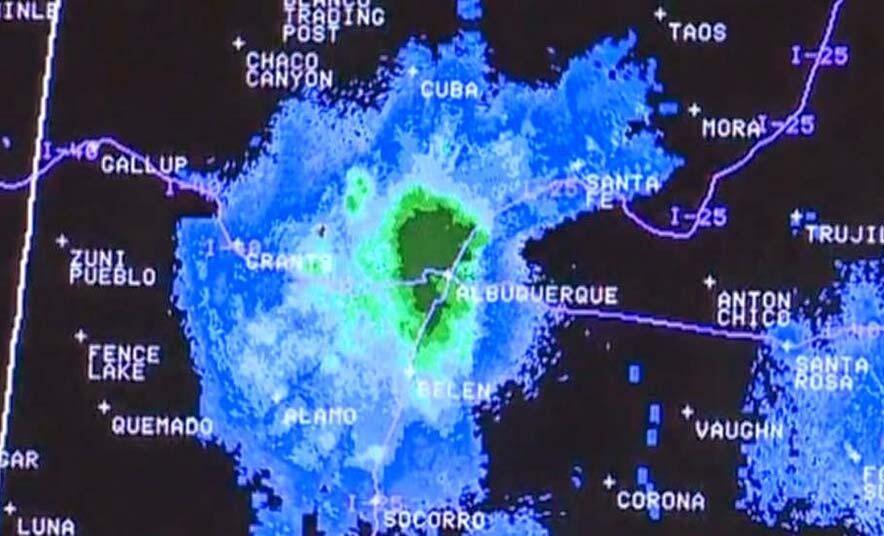
Flying insect swarms come in all shapes and sizes. Last week the USA national weather service found that a grasshopper swarm showed up on their weather radar. The images (on the right) show the sheer scale of the swarm, which was probably flying at 700 meters. This is still relatively small compared to locust swarms, which have been reported to have flown across the Atlantic.


Although the mosquito and midge swarms studied scientifically are lot smaller than locust and grasshopper swarms, in the wild they can still be pretty impressive. The picture on the right is a "mosquito tornado" photographed by Filipa Scarpa. I have no idea what the mosquitos are doing here, but its pretty amazing.

If you have any more insect swarms you think I should cover in the guide, tell me. The deadline is the end of the month.

Thursday, May 29, 2014

Approaches to collective motion

One of the fantastic things about studying collective behaviour is the varying backgrounds of the researchers involved. I am a great believer that there is no unique way of looking at science. The more perspectives we have the more chance we have of understanding the essence of a problem. Many of Tuesday's talks at the Interaction networks and collective motion in swarms, flocks and crowds meeting really captured this diversity. They were focussed on the 'collective motion' problem of describing how fish and birds move in groups.

Information transfer through a fish school.
Work from Iain Couzin's lab
It started with Iain Couzin presenting his recent work on interaction networks in fish. His research group have been able to reconstruct the visual network of schools of fish, understanding who is following who. Iain, who was one of the leading people in developing the classic self-propelled particle like models of collective motion, suggested that the best way to understand information transfer in these groups is through the networks and not necessarily by building particle models. One of the ideas underlying this approach is to use machine learning to find models that best predict the patterns in the data. The next talk by Nicolas Perony also advocated this approach. He is going to use multiple sensors to track the details of what meerkats are doing. Machine learning and "reality mining" will be used to understand these vast quantities of collected data.


Identifying leader follower behavior
at the Giuggioli lab
But there is still place left for 'traditional' approaches of understanding interactions between individuals. Daniel Schardosim Calovi’s talk was on trying to find the interaction rules for Tetra fish. These fish move about in a bursty way, one moving in front followed by another, and capturing these bursts poses new data analysis problems. Maksym Romenskyy was also trying to identify the statistical physics of fish interactions. He showed how this approach might shed new light on attraction/repulsion interactions.  Tsuyoshi Mizuguchi and Luca Giuggioli were both concerned with identifying how alignment patterns change between individuals. 

I really enjoy seeing all these different approaches in action and it is hard to summarize all the new results in a blog post. But the major thing that struck me was how much more exciting work there is to be done. We have solved a lot of problems in collective motion over the last 5 years, but there are still many new challenges.

Sunday, May 18, 2014

The future of automation

Depending on your perspective, technological development has been saving us from drudgery, or destroying our livelihoods, for centuries. From the very first domestication of animals we’ve been finding ways to perform tasks with less human action since civilisation began.

Last week Dr. Michael Osborne from the University of Oxford gave a presentation at the Institute for Futures Studies showing his predictions about which of us will be losing our jobs in the century to come. Michael, as an expert in Machine Learning, is interested in which jobs will be automated as a result of increasing artificial intelligence in the Big Data era. He and his colleagues have been impressed at the rapid pace with which tasks that were seen as impossible for computers to perform, such as driving a car or translating accurately between different languages have become almost routine.

Machine Learning itself can be used to predict which tasks are ripe for automation. First they gathered data on the skills necessary to perform over 700 different jobs, such as social sensitivity, manual dexterity and creativity. A panel of experts was then asked to predict which of 70 specific jobs would be automatable in the near future. Using Gaussian process regression, Michael and his colleagues learned a relationship between the skills a job requires and the probability that a computer will be able to perform, and extrapolated this relationship to the 700 jobs the panel had not evaluated. Their results give us a view on which sectors of the economy will be most affected by the continued rise of artificial intelligence. The graph below shows, by sector, what proportion of jobs are at low, medium or high risk of being automated. In general, those jobs requiring the most necessary social interactions and/or high level creativity appear to be safest from the coming tide of job losses, but none of us can rest too easy!

However, we shouldn’t be too distressed at this imminent redundancy. As Michael pointed out for example, while technological progress has reduced the workforce in agriculture from almost 40% of employment in 1900 to around 2% today, the total unemployment rate has barely changed. Technology has allowed society to move human labour to more productive areas. The results of Michael’s analysis also show that it is generally lower paid, lower skilled jobs that will be destroyed, giving hope that people will be able to move into better employment, if society provides them with the necessary skills.
Nonetheless, Michael also showed examples of resistance to change, such as the guilds of Tudor England blocking the development of machines for making textiles in fear of their members livelihoods. The ever increasing rate of automation, and the subsequent need for people to continually adapt to new careers and find new skills presents society with a powerful challenge, that may require new social contracts, such as a guaranteed citizen’s income and much more investment in public education to solve. It will be exciting to see where this process takes us!


Tuesday, May 13, 2014

Three days of separation

The idea that we are only six introductions away from any other person on this planet is both beautiful and compelling. It has inspired research, provided inspiration to a film starring Will Smith and even launched a charity. According to Microsoft researchers it might also be true. They found that the  that the average path length connecting 180 million Messenger users in 2008 was 6.6. That was before Facebook and Twitter took off. By now the path length has probably shrunk further.

Distance of Zurich residents to their friends.
from: Axhausen, K.W. and A. Frei (2008)
And it isn't just the internet that is shrinking the world. On Friday at the Future Institute, Kay Axhausen, showed that road travel times have halved over the last 50 years, that we dedicate up to 40% of our leisure time to visiting friends and meeting new people, and that these friends are spread over the entire world. In one study, Kay and his colleagues looked at the distance from Zurich residents and their friends. It isn't unusual anymore to have friends spread over 5 orders of magnitude.  Kay argues that this effect isn't limited to Europeans and North Americans, citing recent data from Concepcion, Chile where people have similar friend-distance distributions as Europe. There are apparently a few die-hards who refuse to join the global-village, but they are becoming increasingly rare (as well as isolated).


But the thing that struck me most was the time scale of the links. A recent paper in PNAS looked at bus trips in Singapore. Kay and colleagues drew a line between people if they travelled on the same bus on the same day. In the figure above the red lines show a shared bus trip on Monday, the greens are trips together on Tuesday and a cyan are trips on Wednesday. The last picture are all the weekday trips put together. By Friday, all the people are now connected through shared trips.

It turned out that even by Wednesday all Singapore bus travelers were connected. There are just three days of separation between bus travelers.

A bus trip isn't enough time to make friends. But it is enough time to check out what other people are wearing, what mobile they are using, what newspaper they are reading and even to overhear a few opions about the world. It is enough time for all sorts of interesting social information to spread. This result would have appealed to Stanley Milgram, whose small-world study first led to the 6-degrees idea. Cities fundamentally change the individual's social world in many different ways, not least in the time it takes for us to connect to each other.